To provide the best experience on IzziGo, we use cookies and similar technologies to store and/or access device information. This allows us to improve website functionality, personalize content and recommendations, analyze usage and performance.
We updated our privacy and cookie settings. Please review your choices again.
Analytical, preference, marketing, and external media services require your consent.
You can change or withdraw your consent anytime.
✓
Privacy and cookie settings
Choose which optional technologies IzziGo may use.
Your control
We updated our privacy and cookie settings. Please review and confirm your choices again.
Your privacy choices
Necessary and security technologies keep IzziGo working safely. All other categories are optional and remain blocked unless you allow them.
Open a category to review its purpose and change the setting. You can return here at any time to update or withdraw your consent.
Gravensteen brings a medieval fortress into the heart of modern Ghent. Its stone walls, towers and moat create one of the city’s most distinctive historic sights, while the elevated sections offer views across the surrounding rooftops. Visiting the castle helps travelers understand the scale of medieval power in the city without leaving the centre, and it pairs naturally with a walk through the nearby Patershol streets and historic core.
Inside Saint Bavo’s Cathedral, the Ghent Altarpiece is one of the city’s defining works of art. Created by the Van Eyck brothers, the multi-panel painting rewards slow looking for its detailed figures, landscapes and symbolism. Seeing it in Ghent connects the artwork directly with the city where it has long been associated, making the cathedral an essential stop for travelers interested in Northern Renaissance painting and the cultural history of Flanders.
Walk along Graslei and Korenlei to experience Ghent at its most recognisable waterside setting. Historic façades line both banks of the Leie, reflecting the city’s long commercial importance and creating a lively public space for walking, sitting and watching boats pass. The quays are especially useful as a visual introduction to central Ghent because medieval and later architecture, bridges and river views come together within a compact stretch of the old city.
Try a cuberdon, the cone-shaped Belgian sweet closely associated with Ghent and often recognised by its purple colour. Traditionally, it has a firm outer shell and a soft, syrupy centre, usually with a raspberry-like flavour. Travelers can spot them in confectionery shops and market stalls around the city. Their distinctive shape and texture make them a simple, specific local taste to seek out while exploring central Ghent.
Patershol is a compact historic quarter where narrow lanes and closely packed houses create a more intimate side of central Ghent. The neighbourhood sits near Gravensteen and is easy to explore on foot, with small restaurants and residential streets mixed into the old urban fabric. Rather than focusing on a single monument, a walk here gives travelers a sense of how historic architecture still forms part of everyday city life.
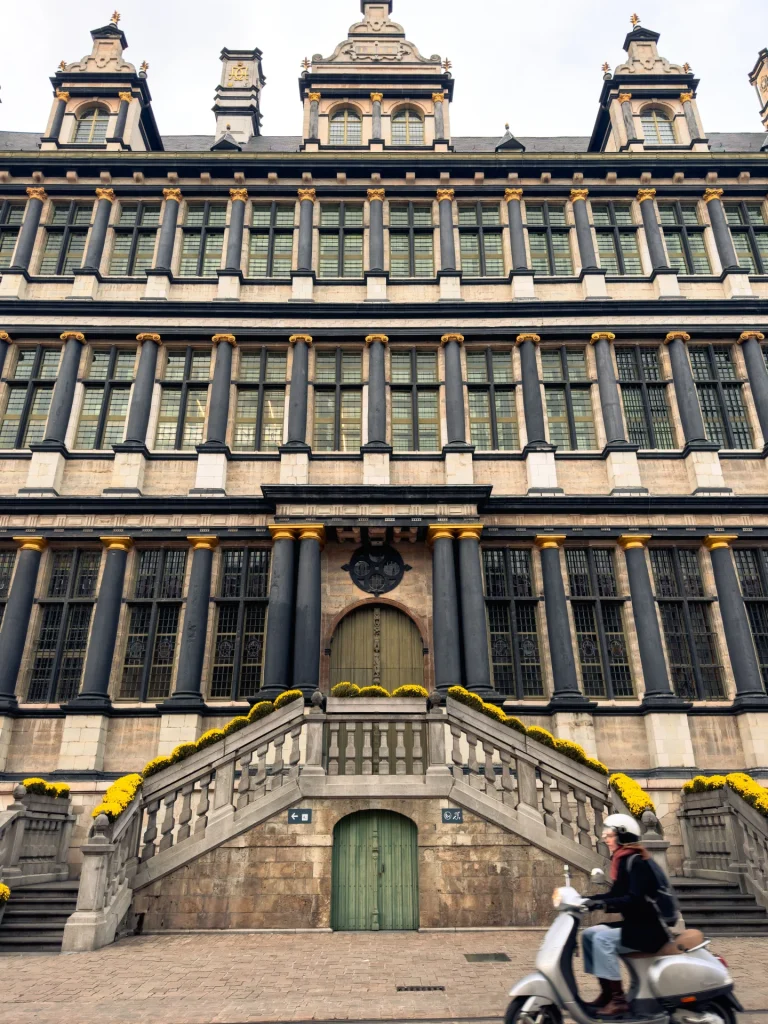
Gent combines a richly preserved historic centre with the energy of a modern university city. Travelers can explore canal-side streets, medieval landmarks, church towers, lively squares and neighbourhoods where cafés, local shops and everyday life sit comfortably beside centuries of architecture. The city is especially rewarding on foot, with many of its best-known sights concentrated around the old centre. Beyond the monuments, Gent offers a strong sense of Flemish culture through food, art, public spaces and the relaxed pace of life along the water.
City culture
Stories from Gent
Local identity, everyday culture, food, neighborhoods and traditions through IzziGo editorial stories.