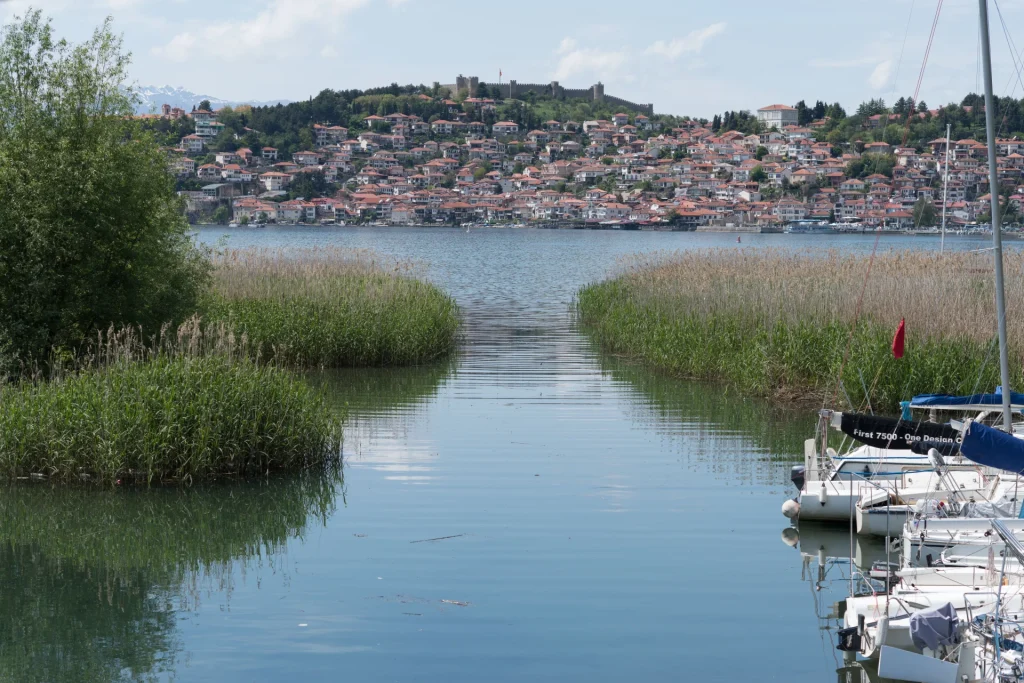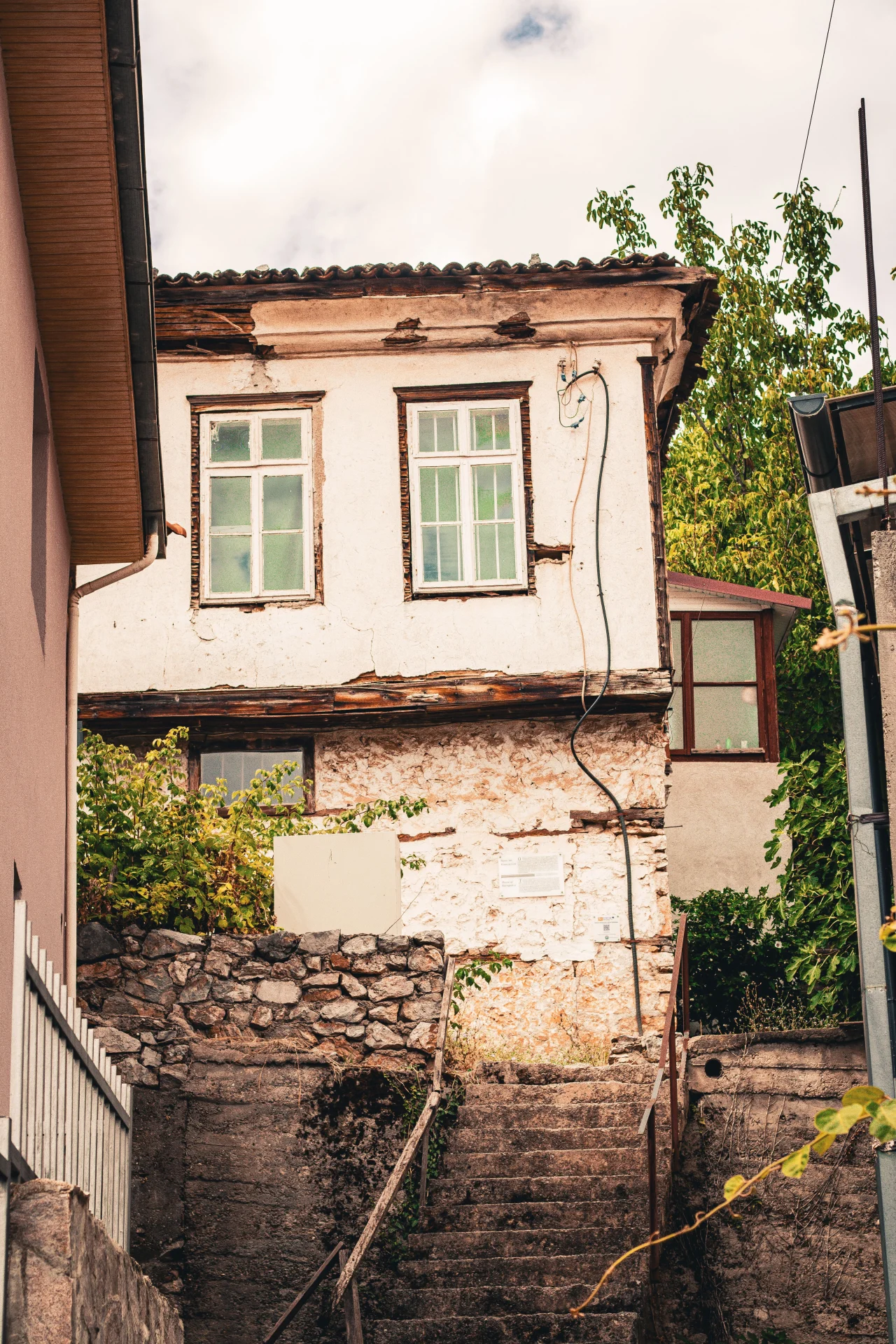
Ohrid’s built character emerges through layers rather than a single architectural moment. In the older parts of town, sloping lanes, stone surfaces, white walls and traditional-looking houses create a close relationship between buildings and terrain. Religious and civic spaces appear within the urban fabric, while views open unexpectedly toward the lake. This combination gives walking a sense of discovery even without following a strict route. Travelers can focus on how structures adapt to slope, how upper levels catch light, and how narrow passages suddenly expand into broader viewpoints. The town feels historic without becoming static because people still move, live and work within these streets. Ohrid’s architecture is best appreciated slowly, at the scale of doors, rooflines, retaining walls and changing perspectives. Together these details create a townscape that reflects long continuity while remaining part of everyday life beside the lake.