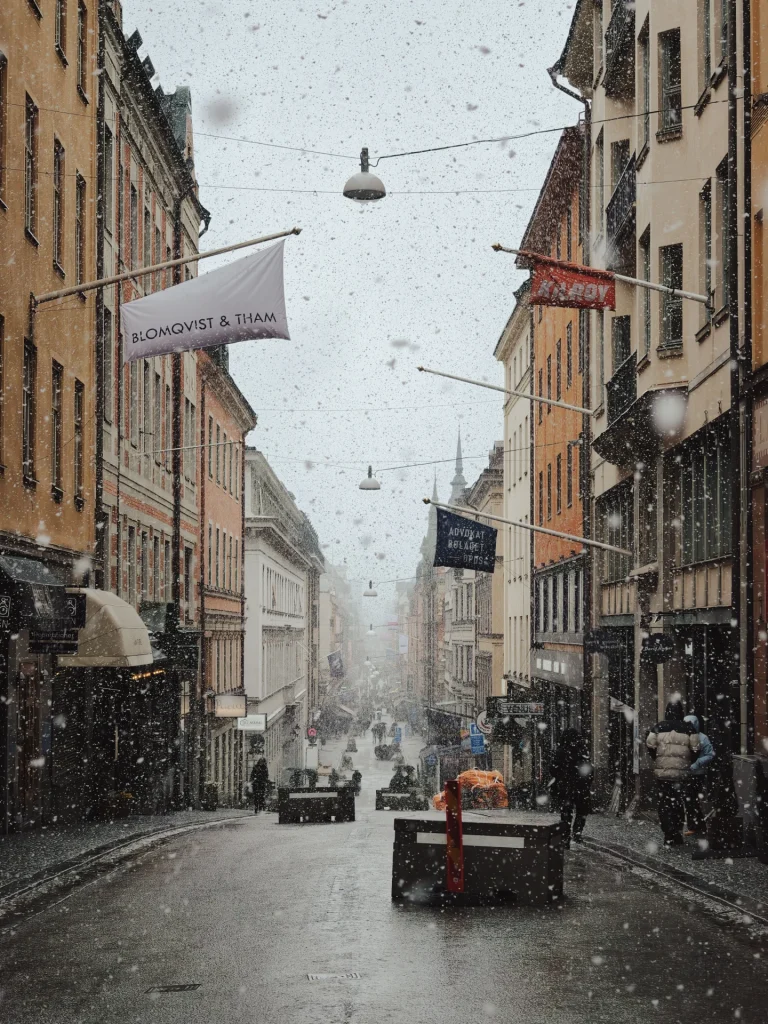
Stockholm’s architecture is easiest to understand as a sequence of layers rather than a single style. In Gamla Stan, narrow lanes, enclosed squares, and closely spaced façades create an intimate scale that reflects the city’s older core. A short journey away, broader streets, apartment blocks, civic buildings, and carefully planned public spaces show later phases of growth. Stockholm City Hall, with its strong red-brick presence beside the water, is one of the clearest examples of how monumental architecture is woven into the waterfront rather than separated from it. Contemporary Stockholm adds another layer through restrained design, converted industrial spaces, glass, wood, and interiors that often favour light and simplicity. What connects these different periods is the relationship between buildings and public movement. Streets frequently lead toward quays, bridges, parks, or views across water. For travelers, the architectural experience comes not only from individual landmarks, but from moving between old stone lanes, residential neighbourhoods, modern cultural spaces, and open waterfront edges.