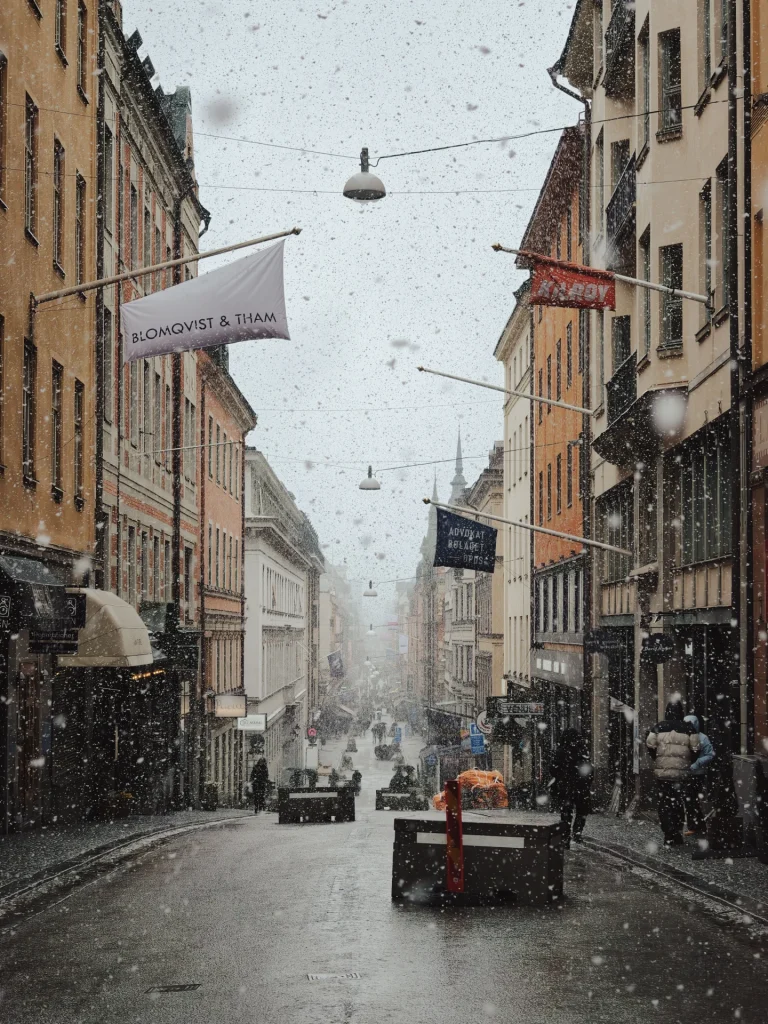
Season changes are unusually visible in Stockholm because daily life is closely tied to light, weather, and the waterfront. In the brighter months, long evenings encourage people to stay outside later, meet in parks, sit beside the water, and move through the city on foot, by bicycle, or by ferry. As autumn arrives, the mood becomes more inward, with cafés, cultural venues, and warm interiors taking on greater importance. Winter brings short days and a strong contrast between cold streets and softly lit indoor spaces. Rather than making the city feel inactive, this shift changes where social life happens. Spring then returns gradually, and the first comfortable days outdoors can make terraces, quays, and parks feel newly discovered. For visitors, Stockholm is therefore not one fixed experience. The same neighbourhood can feel open and expansive in summer, reflective in autumn, intimate in winter, and energetic again in spring. Paying attention to seasonal rhythm helps explain local routines better than sightseeing alone.