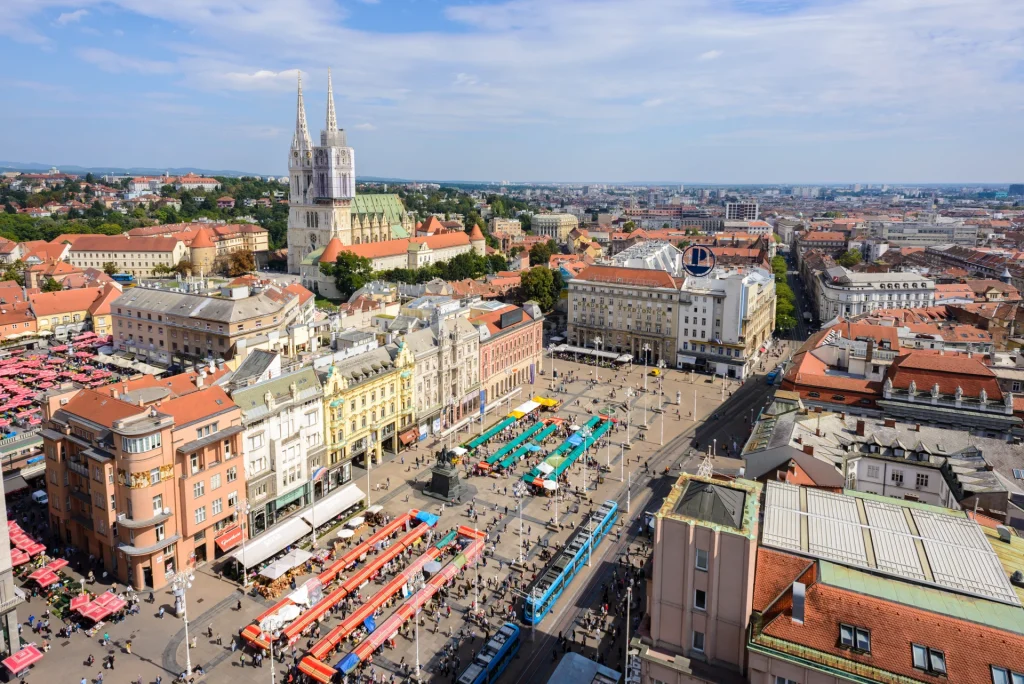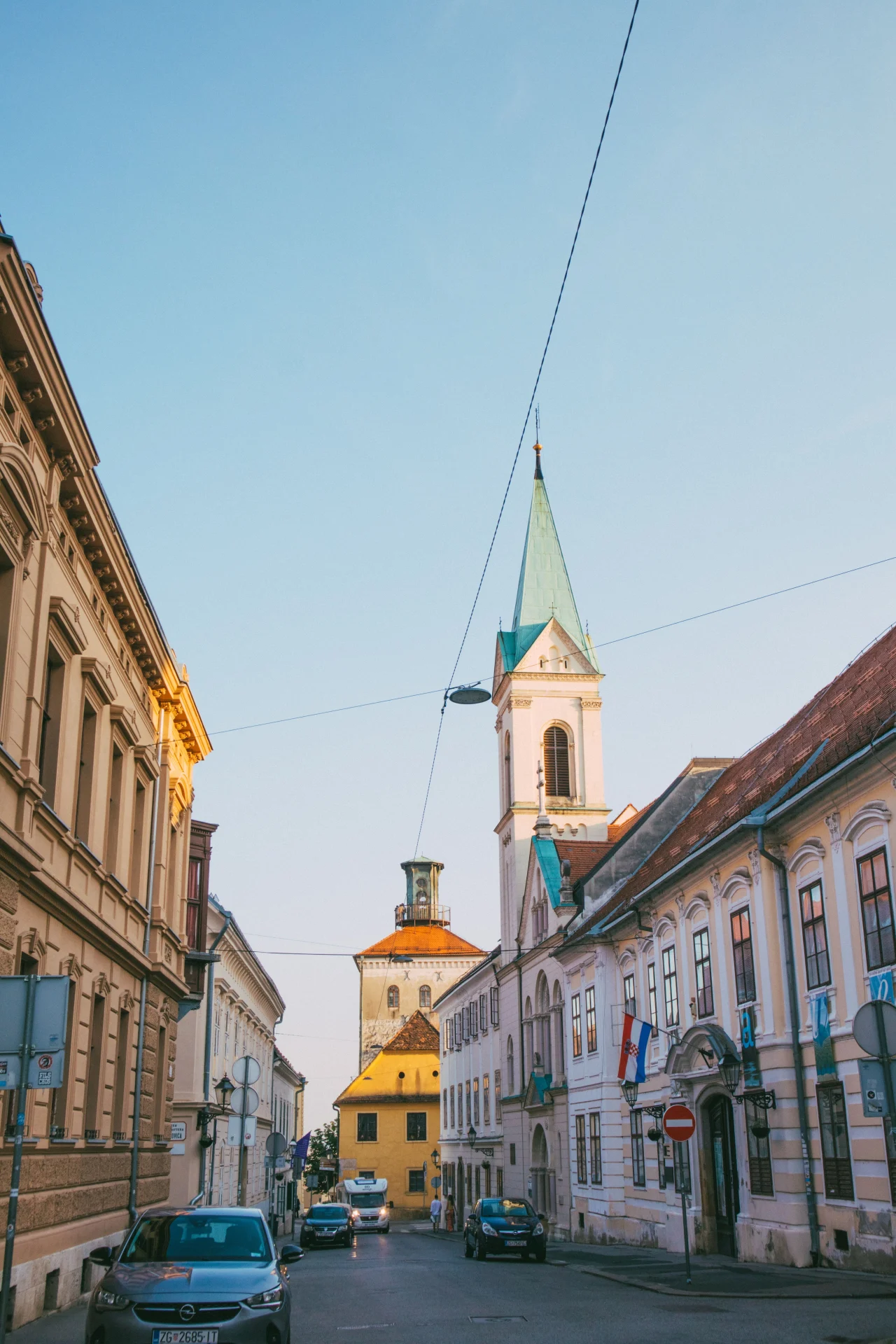
Zagreb’s historic character is especially visible where the streets climb toward the Upper Town. Here, the scale becomes more intimate and the city’s civic and spiritual history can be read through churches, public buildings, small squares, gateways and sloping lanes. Rather than presenting one perfectly preserved era, the area carries layers of rebuilding and adaptation that reflect Zagreb’s long role as Croatia’s political and cultural center. Travelers can experience this heritage without turning the walk into a list of monuments. Listen for the change in street sound, notice rooflines and stone details, and look back toward the lower city as the elevation changes. Religious buildings remain part of the visual identity, while civic spaces show how public life has long been organized around this hilltop core. The reward is atmosphere: Zagreb’s history feels close because it is still part of daily routes, workplaces, ceremonies and neighborhood movement rather than separated from modern life.